
The Amanita Family: Same Roots, Different Warnings (A Guide to Amanita Mushrooms)

Updated: Jun 3
The Forest Does Not Work in Singles
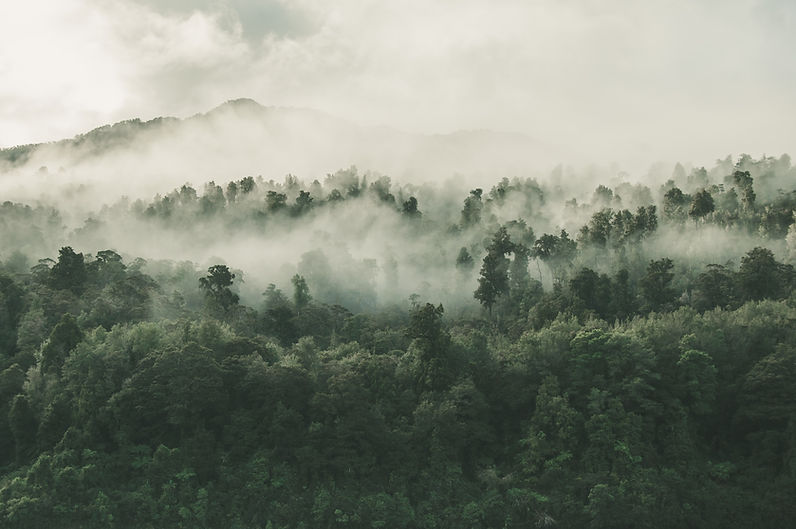
In the forest, nothing truly exists on its own.

The Amanita family of mushrooms, one of the most recognisable and dangerous groups in nature, is often solitary but connected to unseen forces. A single mushroom, like a red cap emerging from leaf litter or a pale dome beside moss, is only a brief surface expression of a much older and more complex underground network.
Fungi spread outward in vast, branching networks that weave through soil, leaf litter, and root systems, forming long-term partnerships with trees and plants. Nutrients, water, and signals are exchanged between species.

Above ground, we notice a momentary structure built to release spores, a punctuation mark in a longer sentence.
Mushrooms are not individuals; they are outcomes that appear when conditions align, allowing the underground system to briefly surface. They are less objects and more messages, proof of an extensive and alive process happening beneath our feet.
Fly agarics and death caps illustrate this truth. Their differences above ground may seem dramatic, but below ground, they are part of the same slow, interconnected conversation the forest has been carrying on for centuries.
Amanita Mushrooms: Beautiful, and Sometimes Deadly
Not all Amanita mushrooms are deadly, but enough of them are to make the entire family one of the most feared in the world.

What makes them especially dangerous isn’t just toxicity, it’s how ordinary they can appear. A pale cap, a quiet presence among leaf litter, nothing that immediately signals danger unless you know exactly what you’re looking at.
In the most toxic species, the damage happens slowly and silently. Symptoms may take hours to appear, by which point the toxins have already begun affecting the liver.
In Australia, several Amanita species grow in the wild, including highly dangerous varieties. Foragers are often warned to avoid this family entirely unless identification is absolute.
Because in this part of the forest, beauty is not a sign of safety. Sometimes, it’s a warning.
What Are Amanita Mushrooms? (One Family, Many Reputations)
Despite their wildly different reputations, fly agarics and death caps belong to the same fungal family, the Amanita genus.

This family includes some of the most visually striking mushrooms in the world, as well as some of the most dangerous. The contrast can feel jarring, but it’s also revealing. Beauty and lethality are not opposites in nature. They are traits that can coexist, sometimes within the same lineage, sometimes within the same patch of forest.
In some places, mushrooms from the Amanita family emerge within metres of one another, sharing soil, tree partners, and underground networks. What separates them above ground is not intent or morality, but timing, chemistry, and chance.
The forest does not organise itself around human comfort or storytelling instincts. It does not label things as safe because they are beautiful, or dangerous because they are plain. It allows both enchantment and hazard to exist, supported by the same ancient systems beneath the ground.
Understanding this requires letting go of the idea that nature owes us clarity. Often, it offers only relationship and consequence.
Fly Agaric: The Mushroom of Stories

Fly agaric, Amanita muscaria, hardly needs an introduction. Its red cap and white flecks have become shorthand for magic, folklore, and fairy tales. It appears in illustrations, holiday decorations, and children’s books as a symbol of wonder and otherworldliness.
That reputation didn’t appear by accident.
For thousands of years, cultures noticed that fly agaric altered perception. Those effects were woven into spiritual practices, myths, and stories of encounters with spirits and other realms. Over time, those stories softened into symbolism, and the mushroom itself became a visual shorthand for magic rather than a record of risk.
What often gets lost in that transformation is the reality behind the myth. Altered perception comes from chemistry, not benevolence. Fly agaric is toxic. It is not edible, not safe, and not a food mushroom under any circumstances. Its effects on the human body are unpredictable and can be severe, which is why modern guidance is unequivocal: this is a mushroom to admire, not to ingest.
The chemistry behind fly agaric’s folklore reputation comes from two compounds: ibotenic acid and muscimol. These toxins act on the nervous system, altering perception, coordination, and consciousness in unpredictable ways. Their effects can range from nausea and confusion to vivid distortions of reality, which is why fly agaric has long been tied to stories of visions and altered states. But those experiences are not mystical gifts, they are the result of neuroactive chemistry, and they carry real risk. Fly agaric may look like a symbol from a fairy tale, but its toxins make it a mushroom to observe, not to consume.
Its place in folklore reflects human fascination with altered states and mystery, not safety or suitability for consumption.
Fly agaric is a mushroom that invites stories, not eating.
Death Cap: Quiet, Plain, and Unforgiving

Death caps, Amanita phalloides, sit at the other end of the cultural spectrum.
There is nothing flamboyant about them. Their caps are pale, their form understated, their presence easy to miss.
They do not announce themselves the way fly agarics do, and that subtlety is part of what makes them so dangerous.
Death caps are responsible for the majority of fatal mushroom poisonings worldwide. Their toxins act slowly, often allowing symptoms to fade before severe organ damage becomes apparent. By the time the danger is obvious, it is often too late.
The danger of the death cap lies in amatoxins, especially α‑amanitin, one of the most lethal natural compounds known. Unlike the fast‑acting effects of many poisonous species, amatoxins work slowly and quietly, targeting the liver and kidneys long before symptoms become severe. By the time illness is obvious, the damage is often already underway.
This is what makes the death cap so unforgiving: its chemistry is lethal, its appearance unremarkable, and its warning signs delayed. It is a mushroom defined not by drama, but by consequence.
There are no fairy tales here. No softened symbolism. Just consequence.
And yet, they are part of the same family.
Same Roots, Different Warnings
It’s tempting to frame fly agarics and death caps as opposites, but that framing misses the deeper point.
They are not opposites. They are relatives.
Both species belong to the Amanita genus and participate in the same kind of ecological work. In many forests, they occupy overlapping territories, drawing sustenance from the same soil layers and forming partnerships with the same tree species, particularly oaks. What differentiates them above ground is not their role in the ecosystem, but their chemistry and timing.
Below the surface, these fungi exist as mycelial networks that entwine with tree roots in ectomycorrhizal relationships. Through these connections, fungi and trees exchange resources. The fungus extends the tree’s reach into the soil, improving access to water and minerals, while the tree supplies the fungus with carbohydrates produced through photosynthesis. This exchange supports both partners and contributes to the stability of the forest as a whole.
The systems that sustain fly agarics also sustain death caps. The forest does not distinguish between what humans find enchanting and what we find dangerous. It does not elevate beauty or suppress risk. It grows what conditions allow, when conditions allow it, guided by ecological balance rather than human values.
The warnings, then, do not come from the forest itself. They arise from how we interact with it, from our tendency to read meaning into appearances and assume intention where there is only function.
Oaks and Amanitas: An Underground Partnership
Many Amanita species, including fly agarics and death caps, form ectomycorrhizal relationships with oak trees. These relationships are not incidental. Oaks are long-lived, deep-rooted trees that invest heavily in underground partnerships, making them ideal hosts for fungi that rely on stable, continuous access to carbohydrates.

Through this partnership, fungal mycelium wraps around the fine root tips of the oak, extending far beyond what the tree’s roots could reach alone. This dramatically increases the tree’s access to water and essential nutrients such as nitrogen and phosphorus. In return, the oak supplies the fungus with sugars produced through photosynthesis.
Because both partners depend on one another, Amanitas are often associated with mature or well-established woodlands rather than recently disturbed ground. Their presence can reflect long-term ecological continuity, even when the forest above ground appears quiet or unchanged.
Seen this way, fly agarics and death caps are not intruders or anomalies. They are participants in an ongoing exchange that supports the forest as a whole.
What Fungi Ask of Us

They do not rely on visual cues, moral lessons, or clear categories. Instead, they require attentiveness. To understand fungi is to understand relationships, not just forms. It means learning which species associate with which trees, what kinds of soil they prefer, how seasons and moisture influence their emergence, and what roles they play beyond their visible structures.
This is where fungi quietly challenge human habits of assumption. Admiration does not equal permission. Familiarity does not equal safety. A mushroom’s appearance tells us very little without context.
Fly agarics teach restraint through allure. Their striking colour and long cultural history invite fascination, but their chemistry demands caution. Death caps teach restraint through severity. Their understated appearance offers no spectacle, yet their consequences are profound.
Fungi are often signs of connection rather than isolation, linked to decay, renewal, and the hidden relationships that keep forests alive.
Both insist on the same lesson, delivered in different tones: observation must come before interaction.

Some organisms are not meant to be consumed, collected, or tested. They are meant to be understood within the systems that produced them.
In many ways, fungi ask us to participate differently in the natural world. Rather than taking, they encourage us to notice. Rather than seeking ownership, they reward patience.
A mushroom may emerge for only a few days, yet the organism behind it may have been present for years, quietly woven through soil, roots, and fallen wood beyond our sight.
Perhaps that is why fungi continue to captivate so many people. They remind us that understanding is not always the same as possession. Sometimes the most meaningful interaction is simply to pause, observe, and leave something exactly where it belongs. In a world that often encourages us to collect, consume, and categorise, fungi offer a gentler lesson: not everything exists for us. Some things exist alongside us, and that is enough.
Looking Beneath the Surface
When we focus only on what rises above ground, we miss the larger story.
The visible mushroom is a temporary structure, produced to release spores when conditions are right. It may last days or weeks before collapsing back into the forest floor. The organism itself, the mycelium, persists unseen, threading through soil and root systems, sometimes across vast areas.

These underground networks move nutrients, redistribute resources, and contribute to the resilience of forests over time. In oak woodlands especially, ectomycorrhizal fungi play a crucial role in tree health, helping mature trees withstand stress, drought, and poor soil conditions. What appears above ground is only the briefest evidence of this long-term cooperation. Because ectomycorrhizal fungi depend on living trees, their presence often reflects the long-term continuity of a forest, not recent disturbance.
Fly agarics and death caps, for all their surface differences, point back to this truth. They are not isolated wonders or singular threats. They are expressions of a living system built on exchange, balance, and endurance.
The forest is not a collection of individual marvels. It is a web of relationships, consequences, and quiet rules that do not bend to aesthetics, symbolism, or stories.
And perhaps that is where its real magic lies, not in what dazzles the eye, but in what continues unseen, season after season, beneath our feet.

